When you sit down to talk with someone who has had to fight for every inch of ground she stands on, you quickly realize how much the rest of us take for granted.
Rubina Chhetry’s story doesn’t start in a cricket academy or a city stadium. Raised by a single mother in Jhapa on a late father’s Rs. 3,000 monthly pension, she learned the game as the only girl playing alongside her cousins in local boys’ baaji tournaments—where she was allowed to bowl, never allowed to bat (in case she got hurt), and still managed to make grown men talk about “that girl from Kakarbhitta who bowls fast.”
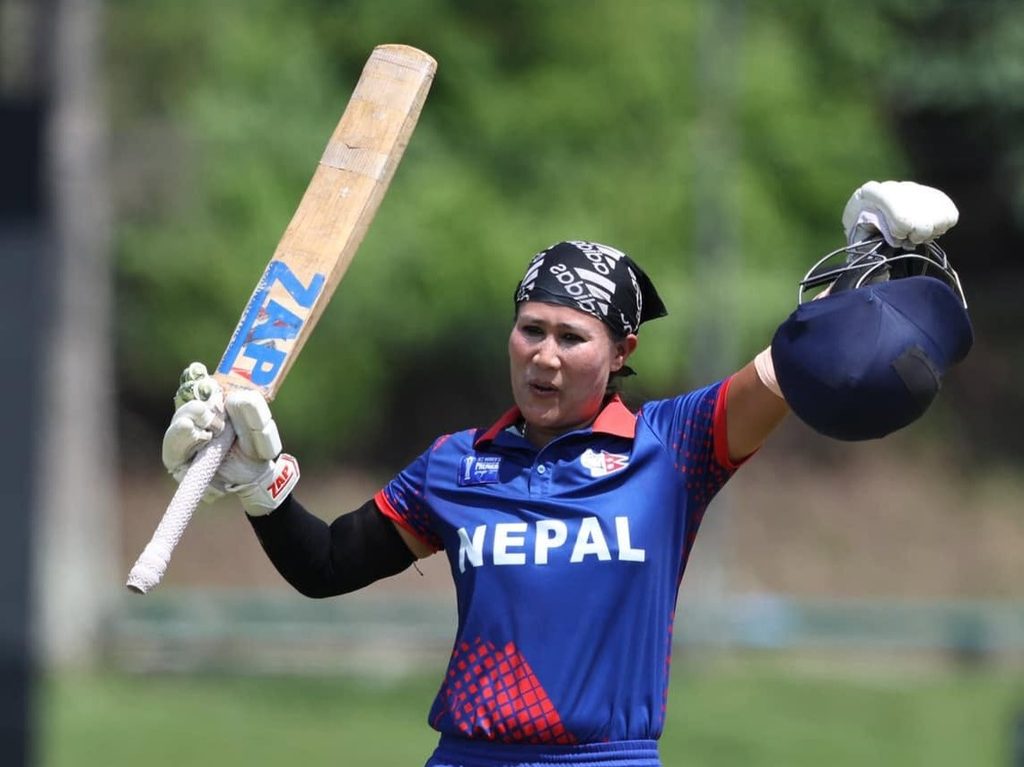
Sitting down with Rubina over a cuppa (virtual) for Cow Corner, I went in expecting to talk about cricket milestones. I came out thinking about character. Here are four things I learned listening to her:
1. Sometimes the hardest opponent isn’t on the pitch—it’s behind a desk.
Before Rubina ever wore a Nepal jersey, she almost quit the game entirely. Selected for her first international tour, she went home to Jhapa to get her passport made. Because her father wasn’t there and her mother held citizenship by birth, local officials flatly refused to process it. For seven days, while her teammates collected their passports in a single afternoon and waited to fly, Rubina ran from office to office hearing “hudaina” on repeat. Eventually, exhausted and humiliated, she went home, unpacked her kit bag, and told her mother she was done with cricket. It took her local academy coaches dragging her to Kathmandu to knock on ministry doors before the passport finally came through. Days later, emotionally drained, she walked onto the field for her debut—and took six wickets. Later, when she went back to the same local office, the officials who wouldn’t sign her papers were suddenly lining up to take photos with her. As Rubina put it, “Everyone loves calling athletes ‘jewels of the nation,’ nobody wants to bother polishing them.”
2. Real leadership means walking away from comfort.
In Nepali women’s cricket, playing for a departmental team like APF means financial security, a steady paycheck, and almost guaranteed domestic trophies. Rubina had that. After five years, she walked away from it. Not because of a fallout, and not because she had a backup plan—she had to sit her mother down and ask for two or three years to prove she could build a life without a government job. Her reason? If every top player hides inside one dominant departmental team, regional cricket dies, and young girls in the provinces stop believing they can win. She went back to Province 1 to build a team that could actually challenge the giants. Few athletes in any sport willingly trade security for purpose like that.
3. Miracles are usually just preparation meeting nerve.
If you follow Nepali cricket, you know the Singapore stat: defending 2 runs with 5 wickets in hand, and somehow winning the match. When I asked Rubina what was going through her head when the captain tossed her the ball, I expected a cliché about “never giving up.” Instead, she gave a masterclass in reading human psychology under pressure. She noticed the batters were visibly nervous, brought every single fielder inside the ring, told herself “two dot balls and they’ll panic,” and calmly dismantled them ball by ball. It wasn’t luck. It was years of watching cricket on a black-and-white TV at home, studying match situations, and refusing to blink first.
4. Discipline is quiet—and sometimes means giving up momos.
At a point in her career when nobody in Nepal was talking to women cricketers about sports science or nutrition, Rubina looked at Virat Kohli’s transformation and decided to overhaul her own life. She hired a professional cricket fitness trainer out of her own pocket, restructured her sleep and training, and gave up chatpate, panipuri, and momos. (I confessed to her during our chat that I could never give up momos—and I meant it.)
At the start of our conversation, I asked Rubina if she considers herself a superstar of Nepali cricket. She immediately shook her head. Until Nepal plays in a World Cup, she said, her work isn’t finished. After spending an hour with her, I’m not sure she needs the superstar label anyway. Some people are just built differently.
Be First to Comment